

The era of simple, text-in-text-out chatbots is rapidly coming to an end. Today, businesses demand autonomous AI agents—systems that can reason, orchestrate complex workflows, interact across multiple channels, and execute real-world tasks seamlessly.
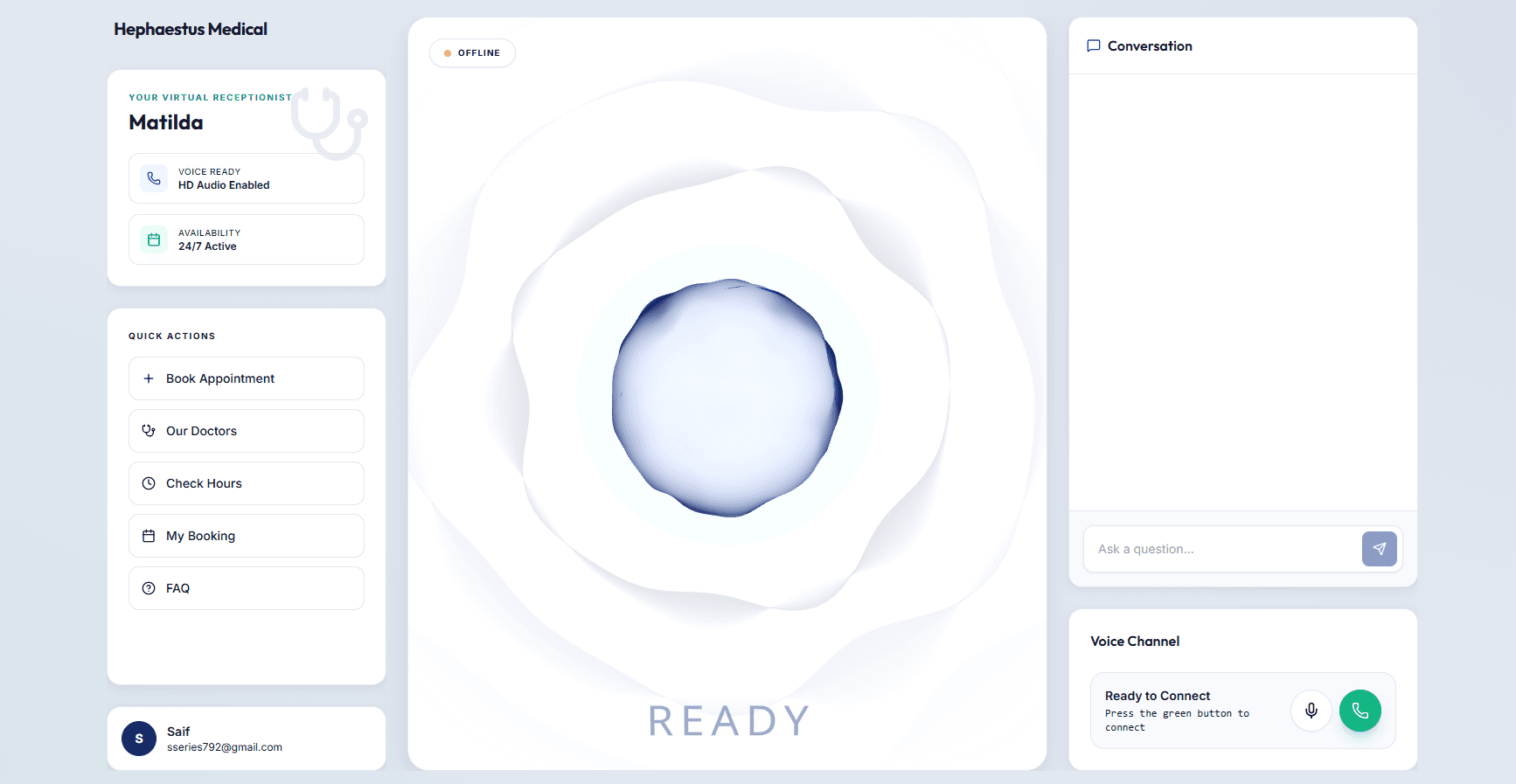
Enter the AI Agent Orchestration Framework, a production-grade, modular orchestration engine built for Node.js. While it ships with a powerful full-stack reference implementation (such as a medical or customer support assistant), its underlying engine is entirely domain-agnostic, making it the perfect foundation for building any conversational AI product.
Let's dive into what makes this framework a game-changer for AI developers.
The Dual Nature: Framework + App
One of the standout features of this repository is its dual-layer architecture. It isn't just a boilerplate; it's two powerful tools in one:
1. The Framework
A reusable agent engine featuring:
Reasoning orchestrator
Pluggable LLM providers
Dynamic skill registries
Multi-channel transformation services
2. The Reference App
A fully deployed, production-ready reference application that demonstrates every capability of the framework in a real-world context, serving as the perfect template to customize for your own products.
Core Architecture and Features
The framework is designed to be highly modular, allowing developers to swap components without touching the core orchestration logic.
1. Pluggable LLM Providers
You aren't locked into a single AI ecosystem. The framework supports dynamic provider switching using a simple environment variable.
Supported providers include:
OpenRouter — Access to hundreds of AI models
Google Gemini — Fast and cost-effective
Alibaba Qwen
Ollama — Fully local, offline deployments
This architecture makes experimenting with new models effortless.
2. Auto-Discovered, Hot-Reloading Skills
Building new capabilities shouldn't require lengthy registration files.
The framework includes a powerful Skill Scanner & Watcher.
JavaScript Skills
Simply write a JavaScript function with a JSDoc annotation:
/**
 * @agent_skill
 */
Python Skills
Create a FastAPI endpoint decorated with:
@agent_skillThe framework automatically:
Discovers the skill
Reads its schema
Registers it with the agent
Makes it immediately available
Hot Reloading
One of the most developer-friendly features is hot reloading.
Create a new skill → Save the file → The agent instantly learns how to use it.
No server restart required.
3. Multi-Channel Support
Modern AI agents must work wherever users communicate.
The framework includes transformation services for multiple channels:
Web Chat
Real-time streaming using WebSockets
Voice Calls
Browser Speech-to-Text
ElevenLabs Conversational AI
Ultra-low latency voice streaming
Phone Calls
Twilio integration
WhatsApp
Twilio Webhooks
Text-based conversations
The orchestration engine remains identical regardless of the communication channel.
4. Rich UI Widgets (Generative UI)
For web applications, conversations extend beyond plain text.
Instead of responding with:
"Please select a doctor."
the agent can emit structured UI tags such as:
<calendar />
<doctor-card />
<appointment-slip />
<calendar />
<doctor-card />
<appointment-slip />The frontend parser intercepts these tags and dynamically renders interactive React components directly inside the chat interface.
This enables:
Interactive forms
Calendars
Doctor cards
Appointment slips
Charts
Custom business widgets
all generated naturally by the AI.
The Developer Experience
Developer productivity is a first-class goal.
Customizing the entire agent personality requires editing a single file:
agent-config.json
{
  "name": "Your Agent Name",
  "personality": "You are a warm, professional scheduling assistant...",
  "businessKnowledge": "Your primary goal is to help patients book appointments...",
  "agentSpeaks": true
}
{
"name": "Your Agent Name",
"personality": "You are a warm, professional scheduling assistant...",
"businessKnowledge": "Your primary goal is to help patients book appointments...",
"agentSpeaks": true
}Want to build:
An HR Assistant?
A Customer Support Agent?
A Sales Development Representative?
A Travel Concierge?
A Banking Assistant?
Simply update the personality and businessKnowledge fields.
Everything else—from orchestration to skills, reasoning, and communication channels—continues to work automatically.
Even better, the configuration file is hot-watched, meaning updates are applied to all active sessions instantly without restarting the server.
Final Thoughts
The AI Agent Orchestration Framework bridges the gap between experimental AI prototypes and production-ready autonomous agents.
By:
Decoupling reasoning from LLM providers
Abstracting skill registration
Supporting automatic hot-reloading
Enabling multi-channel communication
Introducing Generative UI widgets
the framework allows developers to focus on building business logic rather than infrastructure.
Whether you're creating:
An automated customer support representative
An enterprise knowledge assistant
A voice-based receptionist
A healthcare scheduling assistant
An internal corporate copilot
this modular orchestration framework provides the architecture needed to build, scale, and deploy intelligent AI agents with confidence.