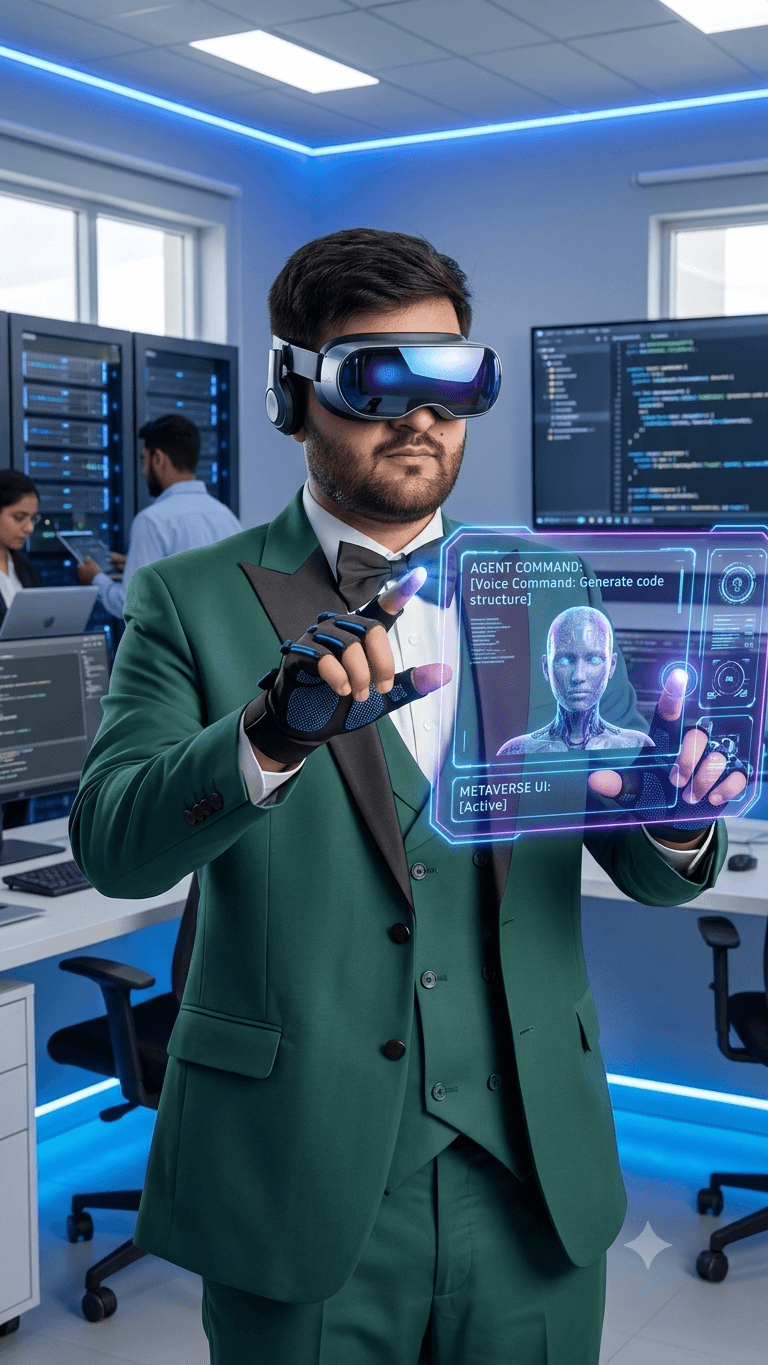


The modern web is shifting. Users no longer want static pages or rigid, utilitarian interfaces—they expect digital experiences that feel alive, interactive, and premium. Whether you're integrating an AI agent or building a dynamic landing page, the key to standing out lies in mastering physics, psychology, and visual density.
Here are the core principles for designing truly immersive, next-generation digital interfaces.
1. Reimagining the AI Agent
For too long, AI assistants have been confined to rigid chat windows that resemble cold, sci-fi terminals. To make an AI agent feel like a premium digital concierge, its design must bridge the gap between advanced technology and human-centered warmth.
Engineering Fluid Physics
An interface should never simply appear—it should arrive with intention. When designing floating action buttons (FABs) or modal windows, physics-based animations create a stronger sense of realism and quality.
The Journey
Separate movement from scaling. Allow the button to physically travel toward the center of the screen before it expands. This creates the illusion of weight, momentum, and physical presence.
The Burst
Use spring-driven scaling, dramatic shadow blooms, and concentric pulsing rings to make the transition feel energetic while remaining controlled and refined.
Data Visualization
Replace generic loading spinners with dynamic SVG animations, such as data circuits converging from the edges of the screen. This visually communicates that a sophisticated system is initializing rather than simply waiting.
Designing a Human-Centric Profile
The AI interface should immediately feel approachable and welcoming. Avoid overly technical terminology like "Latency: 12ms" or "Protocol: Secure" and instead use language users naturally understand, such as "Response Time: Instant" or "Status: Ready to Assist."
Enhance the profile with soft glassmorphism, subtle branded watermark graphics, and a conversational introduction. The objective is to make users feel they're interacting with a premium digital concierge—not a command-line interface.
2. Moving from Abstract to Concrete
Many modern websites rely on floating geometric shapes to occupy empty space. While visually appealing, abstract graphics rarely build trust or communicate genuine expertise.
Leveraging Realistic Mockups
Instead of relying on decorative abstraction, ground your interface in realistic representations of actual workflows.
If you're showcasing project management, display a stylized Kanban board with animated task cards. If you're presenting engineering capabilities, build a simulated code editor complete with syntax highlighting and live typing effects.
Interactive mockups tell a story of competence and craftsmanship that abstract visuals simply cannot match.
Building a Technical Canvas
To prevent these mockups from feeling disconnected from the rest of the page, surround them with a layered technical environment.
Create rich animated backgrounds featuring elements such as:
Slowly rotating radar rings and orbital paths
Expanding concentric pulses
Data transmission beams
Structural grids and network connections
By increasing stroke widths, layering multiple animated elements, and slightly raising background opacity, empty space transforms into an environment that feels active, engineered, and purposeful.
Conclusion
Creating a premium digital experience requires moving beyond simple CSS transitions and flat layouts. By combining intentional, physics-driven animations, realistic interface components, and richly layered technical backgrounds, you can transform a standard website into an immersive software experience.
The interface shouldn't simply tell users what it can do—it should demonstrate its capabilities from the very first interaction.